Circle and Tether are this wave's names for a VOC-era product
Hold one object: Power(N+1) = Power(N) × (Capital × Information × Infrastructure).
Concentration is one wave's pile. Compounding is that pile writing the next charter.
This page is historical interpretation, not a field report.
Host essays: Money in Motion
· Maintained CIRCLE state: /state/
· Dated machine reports: Signal reports
Two seats, changing names
In other words: the product keeps an issuer of the claim and a custodian of the sovereign
paper. In 1602 one company sat in both chairs. In 2026 two issuers sit in the claim
chair. Circle issues USDC; BlackRock manages the reserve fund; BNY holds the bills.
Tether issues USDT. Cantor Fitzgerald sits on that Treasury custody rail.
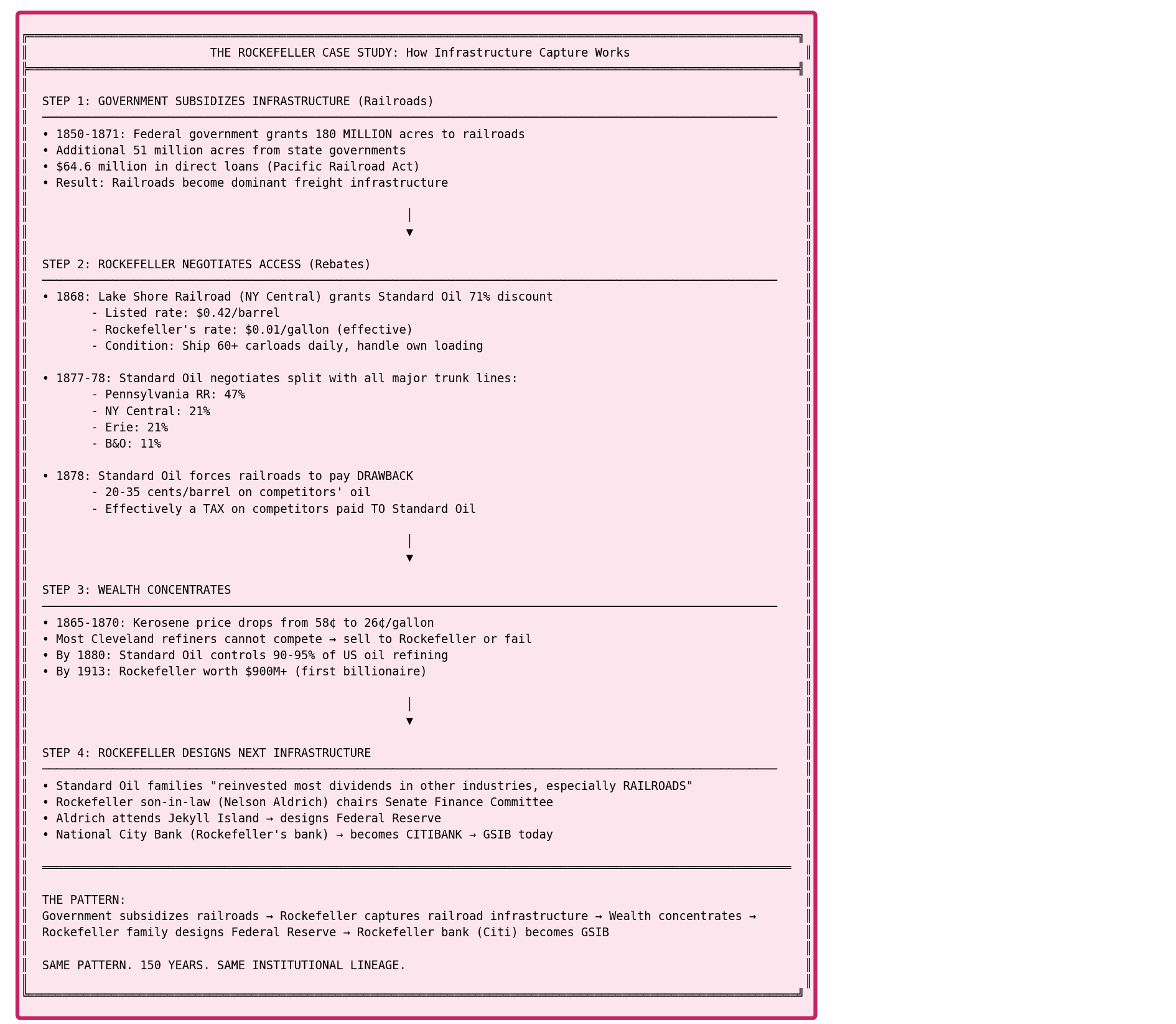
Dated beat, 1868-1913. The government subsidized the railroads. Rockefeller bought the
rebate. Refining concentrated. The same family line sat at Jekyll Island and at National
City Bank.
One mechanism: capture the rail, then design the next one. Open
STANDARD OIL
and
JEKYLL ISLAND
on Field.
Concentration after the reset fails
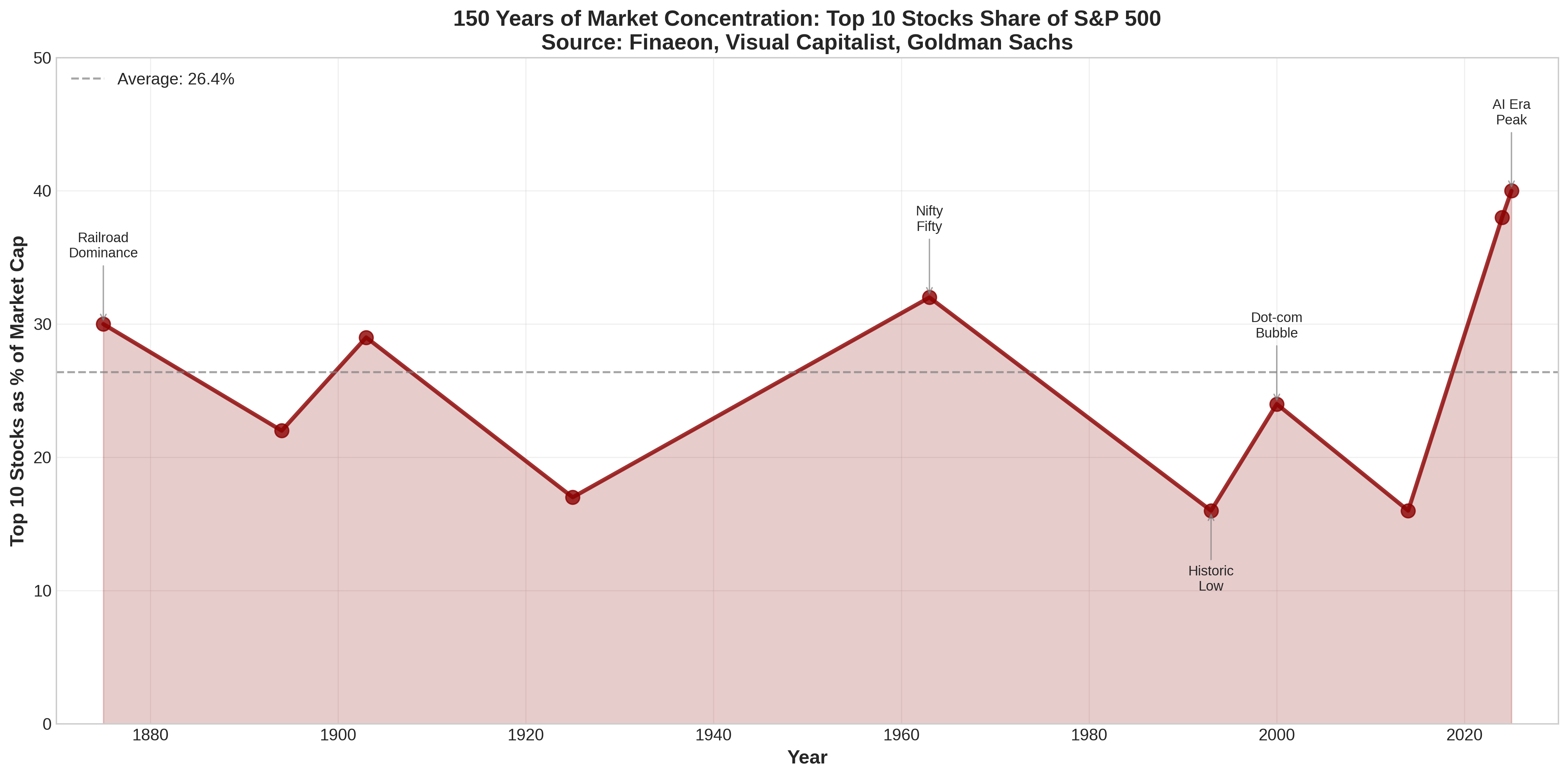
The S&P 500 Top 10 share rose and fell for a century. Antitrust and failure cut waves
down. After 2008 that reset failed. The last leg on the figure is the steepest climb in
the series, labeled near 40 percent.
Sources on the figure: Finaeon, Visual Capitalist, Goldman Sachs. Index concentration,
1875-2025. 2008 sits inside the last rise.
This wave's Treasury rail
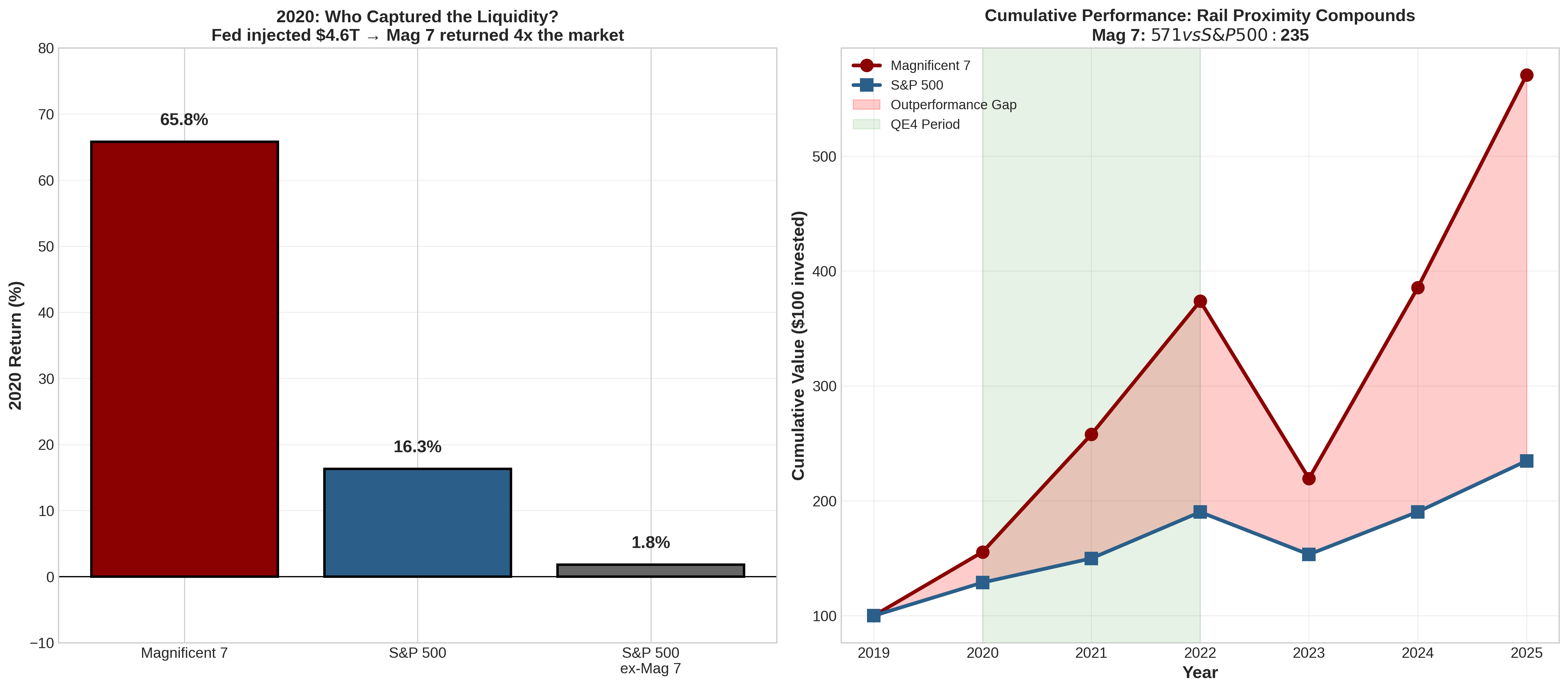
Primary dealers see Treasury liquidity first. In 2020 that proximity showed up as Mag 7
returning 65.8 percent against 16.3 percent for the S&P 500, as labeled. The 2026
wrappers on that same Treasury rail are USDC (Circle, BlackRock, BNY) and USDT (Tether,
Cantor Fitzgerald).
Falsifier: a rail built by outsiders, with inherited books decaying, would break the
product. VOC, Standard Oil, the TARP names, and the 2020 rail seats inherited the last
book and designed the next one. Methodology:
how we measure now.
Field is this wave. Origin is why those nodes exist. Live map:
/field/
· Circle:
?focus=CIRCLE
· Tether:
?focus=TETHER
· VOC has no live dossier.